Hey, this is Golam. Let me tell you about the smallest health habit I know. It needs no gym, no equipment, no special clothes, and no money. It takes about ten minutes. And grandmothers in many cultures have recommended it for generations, long before scientists started studying it: a gentle walk after you eat.
Maybe you have felt it yourself. After a big meal, your body feels heavy, your mind feels sleepy, and the sofa starts calling your name. But on the days you took a short walk instead, you felt lighter, clearer, and somehow more awake. That feeling is not your imagination. There are real benefits of walking after meals, and in this guide I will explain them in simple words, one by one.
I am not a doctor, and this article is everyday wellness information, not medical advice. If you have a health condition, especially diabetes or heart problems, please follow your own doctor’s guidance. But for most healthy people, a slow walk after eating is one of the kindest things you can do for your body. Let us look at why.
Benefit 1: It Helps Your Digestion
When you walk gently, your body moves, and that movement helps your stomach and intestines do their work. Food moves through your system more smoothly instead of sitting heavily in one place.
Many people notice that a short walk after a meal reduces that uncomfortable, stuffed feeling. Less heaviness, less bloating, less of that “I ate too much and now I regret everything” mood. You do not need a fast or hard walk. In fact, for digestion, slow and gentle is exactly right. Think of it as giving your stomach a friendly helping hand.
Benefit 2: It Helps Your Body Handle Meal Energy Better
Here is something interesting that researchers have studied a lot. After you eat, the sugar from your food enters your blood, and your body works to use it and store it properly. When you walk after a meal, your muscles are active, and active muscles happily use some of that sugar for energy.
The result is a smoother, gentler rise in blood sugar instead of a sharp spike followed by a crash. That crash, by the way, is a big reason many people feel sleepy and hungry again soon after eating. A short walk can soften the whole ride. Health organizations like the CDC and the World Health Organization both encourage regular walking as a foundation of a healthy life, and after-meal walks are one of the easiest ways to collect those minutes.
One careful note: if you live with diabetes or take medicine for blood sugar, please talk to your doctor about what activity is right for you after meals. This guide shares general wellness information only.
Benefit 3: It Lifts Your Mood And Clears Your Mind
Have you noticed that problems feel smaller after a walk? There is a reason for that. Walking, fresh air, and changing scenery gently reset your mind. The stress of the day loosens its grip. Ideas that were stuck often start moving, just like your feet.
An after-dinner walk is also a beautiful thinking time. No screen, no noise, just you and your thoughts, or a calm conversation with someone you love. Many people tell me their best ideas and their most honest conversations happen on these small walks. Your body digests the food. Your mind digests the day. Both feel better afterward.
Benefit 4: It Supports A Healthy Weight Over Time
Let me be careful and honest here. A ten-minute walk will not melt away a heavy meal, and anyone who promises that is not telling the truth. But habits work differently than miracles. Three short walks a day, after breakfast, lunch, and dinner, add up to about thirty minutes of daily movement. Over weeks and months, that is real, meaningful activity, collected without ever “going to exercise.”
Walking after meals also quietly replaces a less helpful habit: collapsing on the sofa and snacking again in front of a screen. When you are out walking, you are not standing in front of the fridge. Sometimes the best health habits are simply about where you are, and a walk puts you in exactly the right place.
The NHS walking for health guide makes the same point beautifully: regular walking, even in short pieces, is one of the simplest ways to build activity into a busy life.
Benefit 5: It Can Help You Sleep Better At Night
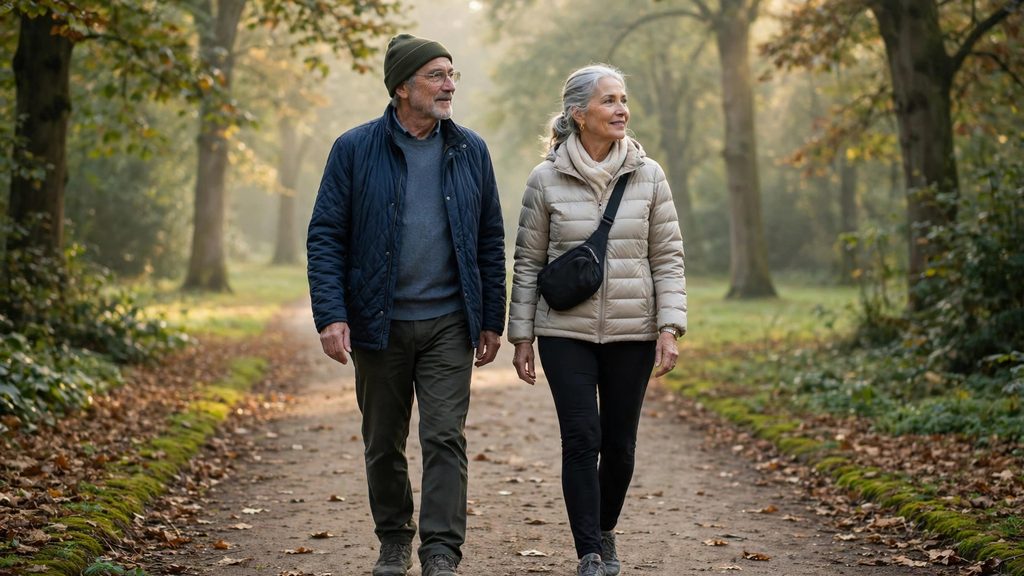
An evening walk after dinner has a special gift: it helps your body wind down. The gentle movement, the cooling evening air, and the break from screens all tell your body that the day is ending. People who walk after dinner often report that they fall asleep more peacefully and wake up feeling more rested.
There is also a digestion connection. Going to bed with a heavy, busy stomach can disturb your sleep. Walking helps your dinner settle first, so when your head touches the pillow, both your body and your stomach are calm. Small habit, double reward.
Benefit 6: It Is Time With People You Love
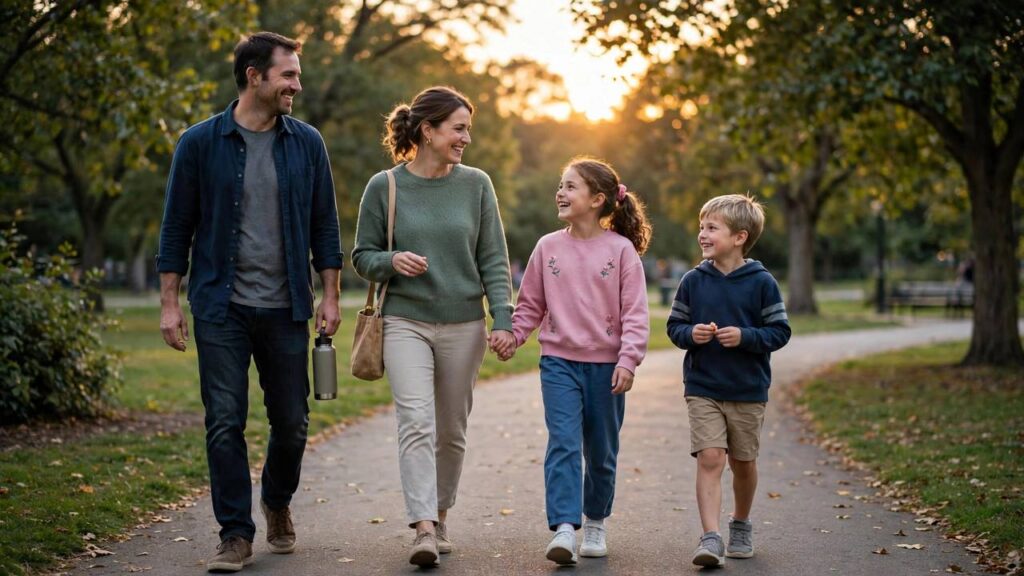
This benefit never appears in medical studies, but it might be the most valuable one. An after-meal walk is a natural family ritual. Parents and children, husbands and wives, grandparents and grandchildren, walking slowly together with full stomachs and open hearts.
No phones competing for attention. No television talking over everyone. Just steps and conversation. In a world that pulls families toward separate screens, ten shared minutes after dinner is a tiny act of love that repeats every single day. Your body gets movement. Your family gets you. Everybody wins.
How To Do It: The Simple Rules
- Wait a few minutes, then go. You can start walking soon after eating. There is no need to wait an hour. A gentle pace is comfortable even with a full stomach.
- Walk for 10 to 15 minutes. Even 5 minutes is better than none. After dinner, many people enjoy a slightly longer walk of 15 to 20 minutes.
- Keep it gentle. This is a stroll, not a workout. You should be able to talk comfortably while you walk. Save the fast, sweaty exercise for other times of day, away from meals.
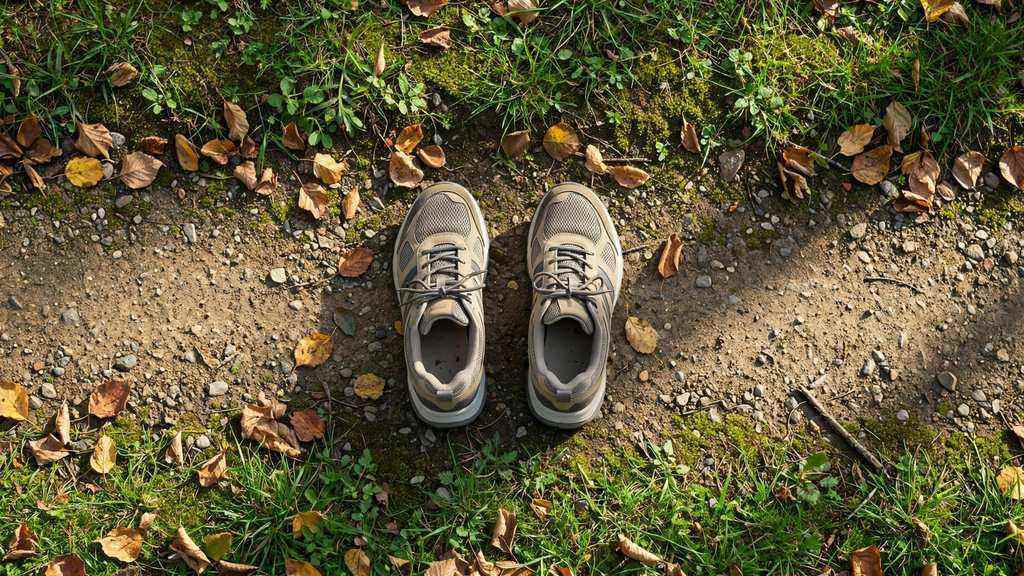
- Wear comfortable shoes. That is the only equipment this habit will ever ask of you.
- Make it automatic. Attach the walk to the meal itself: plates cleared, shoes on, door open. When a habit has a trigger, it stops depending on motivation.
- Start with one meal. If three walks a day feels like too much, begin with just the after-dinner walk. One daily walk, kept faithfully, beats three walks done for one week and abandoned.
And here is a small bonus idea for my readers who love their phones: your walk can be productive too. Listen to a podcast or an audio lesson while you walk, and your body and brain both get fed. Some of my readers even turn their walking routes into income, photographing interesting scenes along the way and selling them, exactly as I explained in my guide on how to make money with stock photos. And if the idea of earning from simple daily activities excites you, my guide on how to make money from your phone is full of gentle next steps.
What Does Research Say, In Simple Words?
You do not need to take my word for any of this. Over the past years, several studies have looked closely at short walks after meals, and their findings point in the same gentle direction. Researchers found that walking for even a few minutes after eating helped the body keep blood sugar steadier than sitting did. In some studies, a few very short walks spread through the day worked as well as, or even better than, one long walk.
Other research on walking in general links regular daily walking with a healthier heart, better mood, and better sleep quality. None of this makes the after-meal walk a medicine, and it never replaces a doctor’s care. But it does mean this old grandmother habit stands on solid, sensible ground. Simple, free, and supported by evidence: that is a rare and lovely combination.
A Gentle 7-Day Starter Challenge
- Day 1: walk 5 minutes after dinner only. Notice how your stomach feels afterward.
- Day 2: walk 10 minutes after dinner. Invite someone to join you.
- Day 3: add a 5-minute walk after lunch.
- Day 4: keep both walks. Leave your phone at home for the evening one.
- Day 5: try a slightly new route. New streets wake up your senses.
- Day 6: add a short walk after breakfast if your morning allows it.
- Day 7: rest from the challenge structure, but take your favorite of the walks anyway. Notice which meal’s walk feels best. That one is now your anchor habit.
Seven days is all it takes to feel the difference in your own body. After that, you will not need a challenge. The habit will quietly ask for itself.
Walking, Wellness, And Your Bigger Life
I write mostly about online income on this site, so let me connect the dots honestly. Your health is the engine under every goal you have. A body that digests well, sleeps well, and thinks clearly will learn faster, create better, and work with more patience than a tired one. Taking care of yourself is not time away from your dreams. It is part of building them.
If you enjoy simple, structured wellness habits like this one, you may like the wellness bundles I explored in my WellnessClaw AI review, which collects guided programs on topics from sleep to healthy routines in one place. And for my readers who are just starting their online journey, my guide on how to make money online for beginners with no experience will meet you exactly where you are.
One last mindset I want to share: big results, in health and in income, come from small steps repeated faithfully. It is the same lesson I teach in my guide on how to make your first $100 online. A ten-minute walk feels like nothing. Ten minutes, three times a day, for a year, is a completely different body and a completely different life. Never laugh at a small step. Small steps are how mountains are climbed.
Common Mistakes To Avoid
- Walking too fast right after a big meal. A hard, fast walk on a full stomach can feel uncomfortable. Gentle is the rule after eating. Save intensity for later.
- Waiting for the perfect time. There is no perfect weather, perfect route, or perfect mood coming. Walk around your building, your street, or even your home if the weather is bad. Done is better than perfect.
- Turning it into a screen walk. Staring at your phone the whole walk steals the mental benefits and is not very safe. Look up. Breathe. Notice the world.
- Giving up after three days. The benefits of this habit build over weeks. Judge it after a month of honest practice, not after a weekend.
- Ignoring pain or medical advice. Walking should feel good. If you feel pain, dizziness, or chest discomfort, stop and talk to a doctor. Always respect your own doctor’s guidance over any article, including this one.
Frequently Asked Questions
How long should I walk after a meal?
For most people, 10 to 15 minutes of gentle walking is a sweet spot. Even 5 minutes brings some benefit, and a relaxed 20-minute walk after dinner is lovely. The best length is the one you will repeat every day.
Should I wait before walking after eating?
You do not need a long wait for a gentle walk. Most people can start strolling within a few minutes of finishing a meal. If you ate a very heavy meal, give yourself a few extra minutes and walk extra slowly at the start.
Is walking after dinner or after lunch better?
Both are good. The after-dinner walk has extra fans because it also helps you wind down before sleep and replaces sofa-and-snack time. But the best walk is the one that fits your real life, at whichever meal that may be.
Can walking after meals help with weight loss?
It can support a healthy weight as part of an active lifestyle and sensible eating, mainly by adding daily movement and reducing after-meal snacking. It is not a magic solution by itself, and honest health advice never promises one. Think of it as a strong, steady helper.
What if the weather is bad or I cannot go outside?
Walk inside. Around your home, in a hallway, in a shopping mall, or on a treadmill if you have one. The habit matters more than the scenery. A simple indoor stroll after meals keeps the routine alive on rainy days.
Is it safe for everyone to walk after meals?
Gentle walking is safe for most healthy people. However, if you have a medical condition, take medicine that affects blood sugar, feel dizzy after meals, or have been told to limit activity, please ask your doctor first. Your doctor knows your body better than any website.
Final Words
Some health habits ask for money, equipment, and willpower. This one asks for ten minutes and a door. Walk gently after your meals. Help your digestion, smooth your energy, clear your mind, and give your family ten unhurried minutes of you.
Start tonight, after dinner. Just once around the block. Notice how your body feels when you return, and how your head feels when it meets the pillow. I think you will understand in one evening why grandmothers have been recommending this for a hundred years.
Small steps, my friend. Taken daily, quietly and faithfully, they carry us much further than we ever imagine at the beginning of the road.