

Hey, this is Golam. Welcome to my website, and thank you for stopping by.
Maybe you have seen big claims online. People say AI can make anyone rich in a week. I want to be honest with you from the very start: that is not true. AI is not a magic money button. But AI tools are very useful, and real people do earn real money with them every day.
Here is the simple truth. AI does not make money by itself. People pay for finished work, like a nice design, a good article, or a helpful video. AI simply helps you make that work faster and better. If you learn to use these tools well, you can offer real services and products that people are happy to pay for.
In this guide, I will show you 7 practical ways to make money with AI tools. Every way is beginner friendly. I use very simple words, and I explain every hard word in plain language. There are no income promises here, because real earnings always depend on your effort, your skill, and your time. But if you pick one way and work on it step by step, AI can become a strong helper in your online income journey.
What “Making Money With AI Tools” Really Means
First, let us understand the basic idea. AI means “artificial intelligence.” In simple words, it is smart computer software that can write text, draw pictures, edit videos, and even speak in a human-like voice.
Now here is the key point that most beginners miss. Nobody pays you just for owning an AI tool. People pay for the finished result. A shop owner does not care which app you used. The shop owner cares that the poster looks good and brings in customers. A blog owner cares that the article is clear and helpful. The tool is just your helper. Your real product is the finished work.
Think of it like a kitchen knife. A knife does not cook dinner. A good cook uses a knife to cook faster. In the same way, you are the cook, and AI is your knife. The better you get at guiding the tool, checking its work, and adding your own human touch, the more valuable your work becomes.
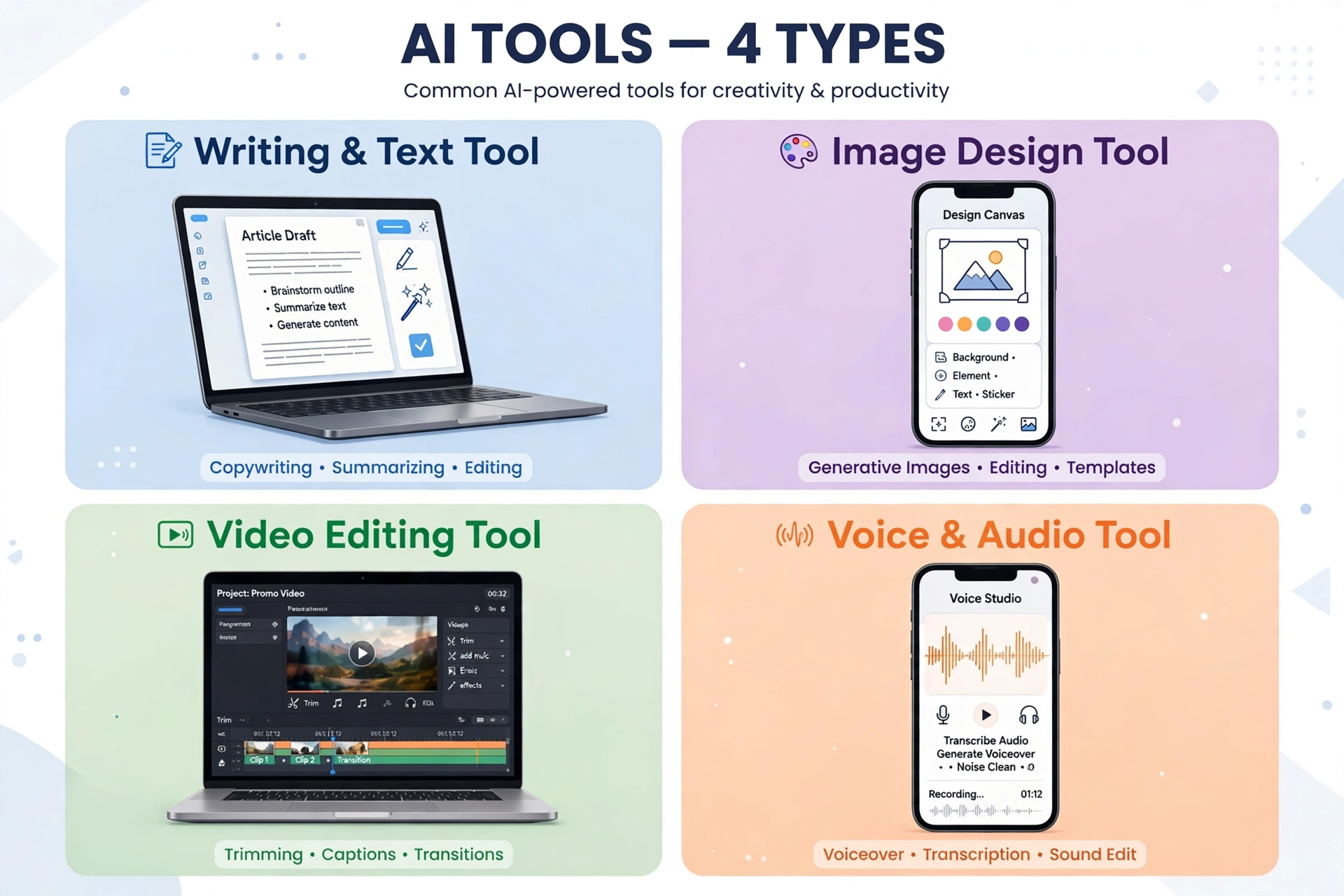
There are four main types of AI tools you will see in this guide:
- Writing tools that draft articles, emails, and captions.
- Image tools that create designs, logos, and pictures.
- Video tools that help you make and edit videos.
- Voice tools that turn text into natural spoken audio.
Researchers at the International Labour Organization have studied how this new AI technology is changing jobs around the world. Their work shows that AI is becoming a normal part of many kinds of work. That is good news for beginners, because businesses now need people who know how to use these tools. Let us look at seven simple ways you can be one of those people.
7 Practical Ways to Make Money With AI Tools
You do not need to learn all seven ways. In fact, trying everything at once is a mistake. Read the list, pick the ONE way that sounds most fun to you, and start there. You can always add a second way later.
1. Offer AI Writing Services
Many small businesses need written words every week. They need blog posts, product descriptions, emails, and website text. Most owners are too busy to write all of this themselves. With a writing tool like ChatGPT, you can create a first draft in minutes. Then you edit it, fix the weak parts, and make it sound natural and human.
The editing step is where your value is. Raw AI text often sounds flat and boring. A good editor makes it clear, warm, and useful. Businesses pay for that finished, polished result. Start with one type of writing, like blog posts for local shops, and get good at it.
2. Offer Design Services
AI image tools can create logos, social media posts, posters, and ads. Small shops, YouTubers, and online sellers always need fresh designs, and many cannot afford a full-time designer. You can offer simple design packages, like ten social media posts per month for one client.
To do this well, learn one design tool deeply instead of five tools poorly. If you want to see what a modern all-in-one creative tool can do, read my MagicCanvas review, where I walk through an AI tool that combines many image and video features in one place. Tools like this make it much easier for a beginner to produce clean, professional designs.
3. Create Short Videos for Businesses and Creators
Short videos are everywhere now: TikTok, Instagram Reels, and YouTube Shorts. Businesses want these videos, but filming and editing takes time. AI video tools can help you write the script, build the scenes, add captions, and even add a voice, all much faster than the old way.
You can offer this as a service to local businesses and busy creators. If you want to explore tools built for this job, my VidZonic AI review shows one option for making full videos with AI, and my PodShorts review covers a tool that turns long podcast audio into short, shareable clips. Short videos are one of the most in-demand services right now, so this is a great place for beginners to start.
4. Create and Sell Ebooks and Digital Products
A digital product is a file people buy and download, like an ebook, a planner, a template, or a checklist. You make it once, and you can sell it many times. AI can help you plan the chapters, draft the text, and design the cover. You still need to check every page and add your own knowledge, because buyers can spot lazy, low-quality work very fast.
Simple ideas work well: a beginner guide about a hobby you know, a meal planner, or a set of study notes. You can also create fun products, like short comic stories. My ComicAgent AI review explains a tool that helps beginners create AI comics, which some creators sell or use to grow an audience. Pick a topic you truly understand, and make the product genuinely helpful.
5. Help Small Businesses With Social Media
Think about the small shops near you. A bakery, a salon, or a small clothing store. Many of them have social media pages that sit empty because the owner has no time. You can offer a simple monthly service: write their captions, plan their posts, and design their images with AI tools.
This is a friendly way to start because you can walk in, introduce yourself, and show two or three sample posts you made for their type of business. When an owner sees their own product in a beautiful post, the service becomes very easy to understand. Start with one or two clients, do great work, and let happy clients tell other owners about you.
6. Sell Print-on-Demand Designs
Print on demand means this: you upload a design, and a company prints it on a t-shirt, mug, or bag only when a customer orders it. You do not buy stock, and you do not ship anything. The company handles printing and delivery, and you earn a small part of each sale.
AI image tools are perfect for creating these designs, like funny quotes for pet lovers or simple art for teachers and nurses. Be careful about one thing: never copy famous characters, logos, or other people’s art. Create original designs only. Earnings here are usually slow at first, so treat this as a fun side project that can grow over time.
7. Build Your Own Content Channel or Blog
The last way is slower, but it can become the most valuable. You start your own YouTube channel, TikTok page, or blog about a topic you enjoy. AI tools help you plan topics, draft scripts, and make videos or articles faster. Over time, your content can earn money from ads, affiliate links, and your own products.
An affiliate link is a special link to a product. When someone buys through your link, you earn a small commission at no extra cost to them. This very website works in this way. Tools can make the content side much faster; for example, my ViralForge review looks at an AI tool made to help creators produce viral-style content. Remember, a channel takes months of steady work before it earns well, so pick a topic you will still enjoy next year.

Free AI Tools to Start With (And When a Paid Tool Is Worth It)
Good news: you can start with free tools. You do not need to spend money on day one.
- ChatGPT — the free plan at OpenAI is enough for writing practice, ideas, and first drafts.
- Free design tools — many image tools offer free plans with daily credits, which is plenty for making your first samples.
- Free video editors — basic editors on your phone or computer can finish your first short videos.
So when is a paid tool worth it? My simple rule is this: earn first, then upgrade. A paid tool makes sense when a real client or real sales are paying for it, and when it clearly saves you hours of work. If a tool costs money but you have no income from that work yet, keep using the free version and keep practicing. Your skill matters far more than your software.
Step by Step: From One Idea to Your First Client or Sale
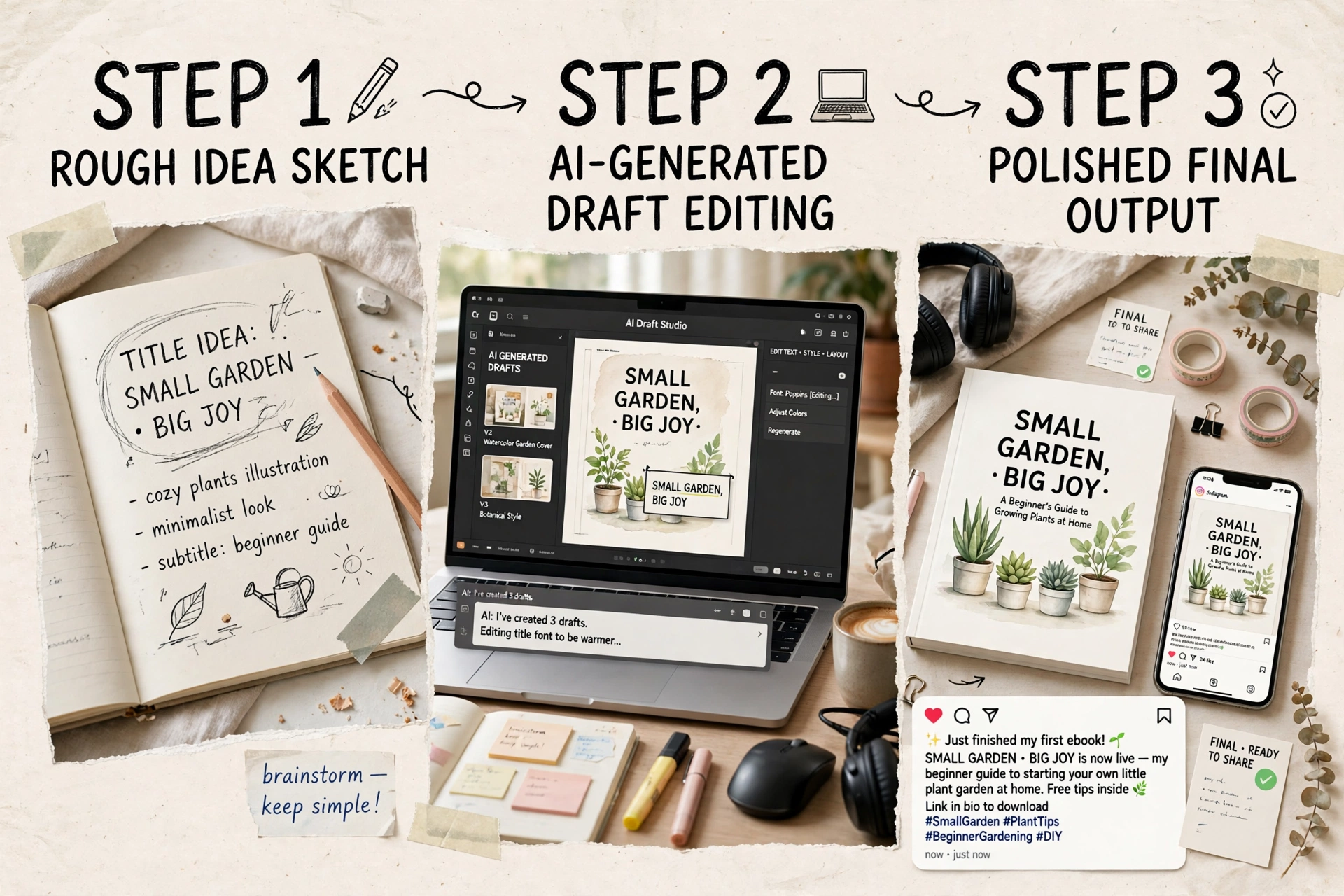
Ideas are nice, but steps get results. Here is the simple path I suggest for every beginner reading this guide:
- Pick one way from the list of seven. Choose the one that matches something you already enjoy, like writing, drawing, or making videos.
- Learn one tool for a few days. Watch free tutorials and practice every day. Small daily practice beats one long weekend session.
- Make three sample pieces. If you chose writing, write three sample blog posts. If you chose design, make three sample posters. Samples prove you can do the work.
- Show your samples to people. Create a free profile on a freelance website like Upwork, where businesses post jobs every day. You can also visit local shops in person and show them your samples.
- Offer a small first job. Keep your first price fair and beginner friendly. The goal of job number one is not big money. The goal is a happy client and a good review.
- Deliver on time, then ask for feedback. A kind review from a real client is gold. It makes your second and third jobs much easier to win.
That is the whole system. One way, one tool, three samples, one small job, then repeat and improve. Nothing about it is secret, and that is exactly why it works.
Mistakes to Avoid
Before you start, please avoid these common beginner mistakes:
- Sending raw AI output. AI text and images always need a human check. Fix mistakes, improve weak parts, and add your own voice. Clients pay for quality, not for copy and paste.
- Selling fake reviews or fake work. Never write a review for a product you have not used, and never pretend AI work is something it is not. Honesty protects your reputation, and your reputation is your business.
- Buying many paid tools before earning anything. Five paid subscriptions will not make you money. One free tool, used well, can.
- Copying other people’s work. Use AI to create original work. Copying designs, text, or characters can get your accounts closed and your products removed.
- Expecting fast money. The first weeks are for learning and building samples. People who quit in week two never reach the part where it gets easier.
- Jumping between all seven ways. Pick one way and give it real time. Focus is what turns a beginner into a professional.
Frequently Asked Questions
Do I need experience or a degree to make money with AI tools?
No. You do not need a degree, and you do not need past job experience. You need one useful skill, like writing clear posts or making nice designs, and AI tools help you build that skill faster. Start with free tools, practice a little every day, and make sample work. Your samples are your proof, and they matter more than any certificate.
How much money can I make with AI tools?
There is no fixed answer, and you should be careful with anyone who promises you an exact amount. Earnings depend on your skill, your country, the service you offer, and how much time you work. Most beginners earn small amounts at first, from their first small jobs. With better skills and repeat clients, the income can grow over time. Think of the first month as paid learning, not as a salary.
Are free AI tools really enough to start?
Yes, truly. Free plans are strong enough for learning, practicing, and making your three samples. Many beginners complete their first paid jobs using only free tools. Upgrade to a paid tool only when a client project clearly needs it and the income from your work can cover the cost.
Is it legal to sell work made with AI tools?
In most cases, yes. Millions of freelancers sell writing, design, and video work made with AI help. Just follow three simple rules. First, read the rules of the tool you use, because each tool has its own terms. Second, never copy protected characters, logos, or other people’s art. Third, be honest with clients about how you work if they ask. Original work plus honesty keeps you safe.
How long does it take to get the first client or sale?
There is no exact timeline. Some beginners find a first small job within a few weeks of showing samples. For others, it takes a couple of months. The speed depends on how many people see your samples and how clear your offer is. The most reliable way to shorten the wait is simple: make good samples, show them to many people, and do not stop after the first few “no” answers.
Final Thoughts
Let me leave you with the short version. AI tools do not make money by themselves. People make money by using AI tools to create finished work that others need and value. You now know seven practical ways to do that, the free tools you can start with, and the exact steps to your first client or sale.
So here is your small action plan for this week: pick ONE way, learn ONE tool, and make THREE samples. Then show those samples to real people. That is how every expert started, and it is how you can start too. I am cheering for you. Take the first small step today, and let the AI tools do the heavy lifting while you build real skills.