

Hey, this is Golam. Welcome to my website.
Do you want to earn money online, but you have no money to start? I have good news for you. You can start affiliate marketing for free. You do not need to buy a course. You do not need paid website hosting. You do not need any special skill.
In this guide, I will show you the full process, step by step, in very simple words. You will learn what affiliate marketing is, how to join free programs, where to post your content, and how to share your links the right way.
One honest note before we start. Starting for free means you pay with your time, not your money. Affiliate marketing is not fast money. Most people need weeks, or even a few months of steady work, before the first commission comes. But the start costs zero dollars, and that is why it is perfect for beginners.
What Is Affiliate Marketing?
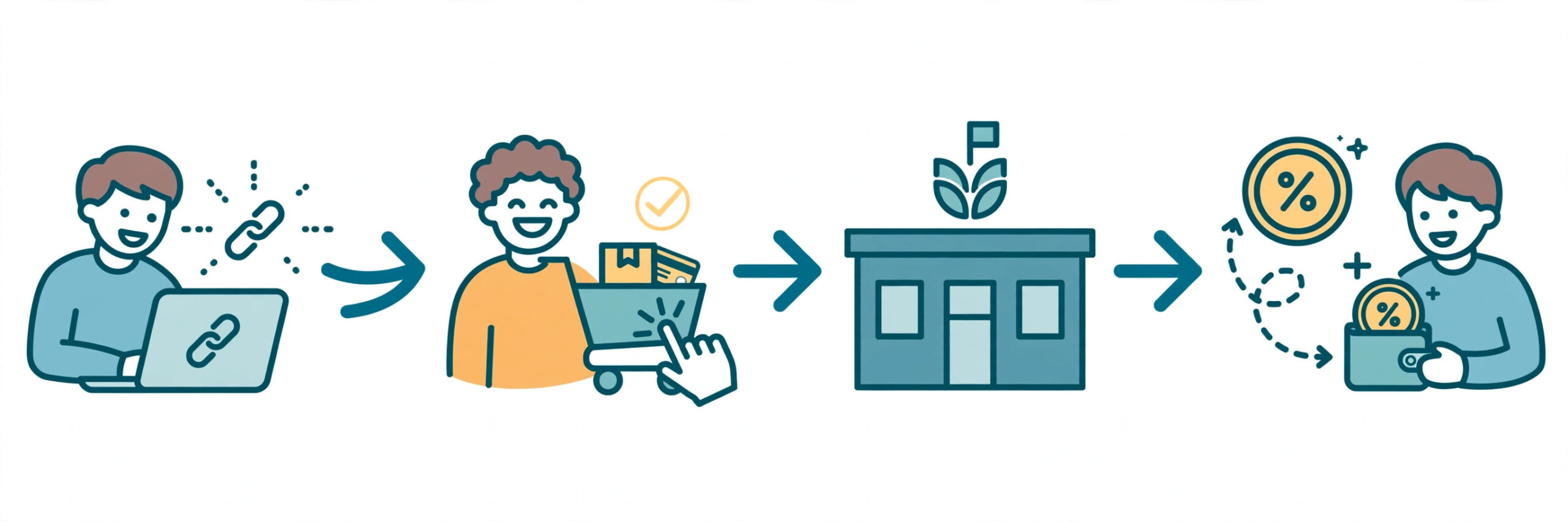
Affiliate marketing is a simple idea. A company sells a product. You help people learn about that product. You share a special link. When someone clicks your link and buys, the company pays you a small part of the price. That payment is called a commission.
Your link is special because it has your own code inside it. That code tells the company, “This buyer came from you.” This is how the company knows who to pay.
Let me give you a simple example. A company sells a coffee machine for $100. You write a helpful post about that coffee machine and add your link. A reader clicks your link and buys the machine. The company pays you, for example, $10 as a thank-you. You did not sell anything from your own shop. You only shared good information and a link.
You do not hold products in your house. You do not pack boxes or ship anything. You do not talk to angry customers. Your job is only to create helpful content and share your link. Simple, right?
Companies like this system because they only pay when a sale happens. Beginners like it because they can start with no shop, no stock, and no money. That is why affiliate marketing is one of the most popular first steps for people who want to earn online.
Step 1: Pick a Simple Niche You Already Know
A niche is a topic. It is one clear subject that all your content is about.
Many beginners make a mistake here. They try to talk about everything at the same time. That does not work well. It is much better to pick one topic and stay with it.
Pick a topic you already know, or a topic you enjoy. Ask yourself these simple questions:
- What do my friends ask me for help with?
- What do I watch or read about in my free time?
- What products do I already use and like?
Simple niche ideas are cooking tools, home fitness, pet care, phone apps, online courses, beauty products, or software tools. On this website, I mostly talk about software and online tools, because that is the topic I enjoy the most.
One topic is enough to start. You can always grow into more topics later.
Here is one more tip. Pick a niche where people already buy things online. If people in your niche buy products, there will be affiliate programs for you to join. A topic you love, with products people buy, is the perfect mix.
Step 2: Join Free Affiliate Programs and Networks
After you pick your niche, you need products to promote. You find them in affiliate programs. Joining a real affiliate program is always free. If a program asks you to pay money just to join, walk away. That is a bad sign.
There are two simple ways to find programs:
- Direct programs: Many companies run their own program. The most famous one for beginners is Amazon Associates. There, you can promote almost any product on Amazon. The commission is small, but it is a trusted place to learn.
- Affiliate networks: A network is one website that holds many companies’ programs in one place. You join the network one time, and then you can pick from many products. Popular networks are ShareASale, ClickBank, JVZoo, and Impact. Joining them is free too.
Before you join a program, check these three things:
- Commission rate: How much do you earn from each sale?
- Cookie length: A cookie is a small note saved in the buyer’s browser. It remembers that the buyer came from your link. If the cookie lasts 30 days, you still get paid when the person buys within 30 days. A longer cookie time is better for you.
- Payout threshold: This is the smallest amount you must earn before the company sends your money. For example, some programs pay you only after you earn $10 or $50.
On my website, I review many affiliate programs and systems, so you can see how they work before you join. For example, you can read my ReferralNow review to see how a referral-based program works, or my SuperAffiliates AI review to see an affiliate system built for beginners.
Step 3: Choose a Free Platform for Your Content
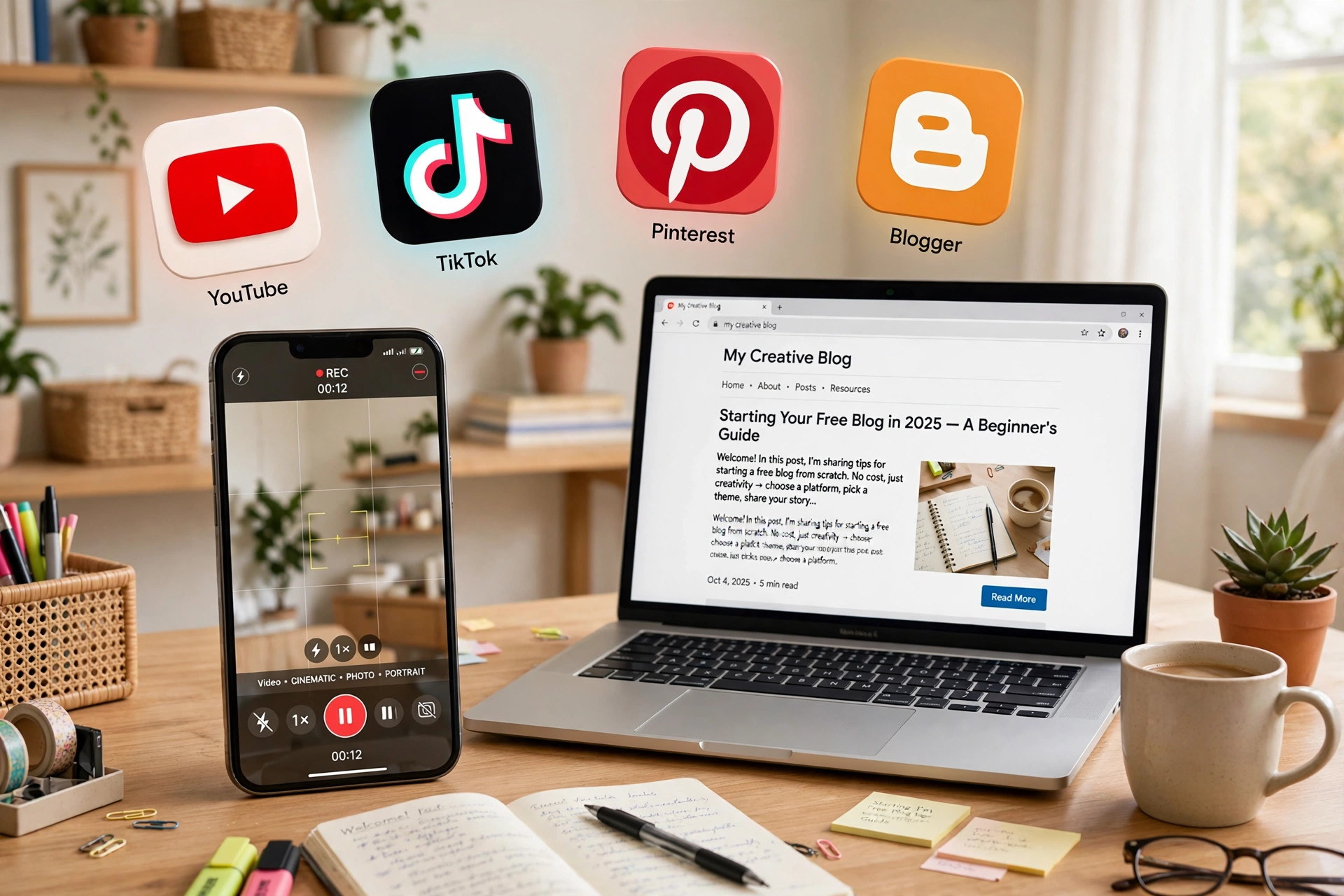
Now you need a place to post your content. The good news is that you have many free choices:
- A free blog: You can start a blog for free on Blogger or WordPress.com. A blog is great because your posts can show up in Google search for a long time.
- YouTube: You can make videos with your phone. Many beginners film simple product demos and easy tutorials.
- TikTok and short videos: Short videos can reach many people very fast. They are good for quick tips and product demos.
- Pinterest: Pinterest is free, and people there search for ideas and products. It works well for simple images with links.
- Medium: You can write articles on Medium for free and add your links inside the text.
Pick only one platform at the start. The best platform is the one you will really use every week. If you like writing, start a free blog. If you like talking, start with videos.
You also do not need a computer for this. Many beginners start with only a phone. You can record videos, write posts, and manage your affiliate accounts from your phone. A laptop is nice to have, but it is not a must.
Later, if you want your own website pages and an email list in one place, you can check my Systeme.io review. It is a tool with a free plan that lets you build pages and collect emails without monthly cost at the start.
Step 4: Create Your First Helpful Content
Content means your posts, videos, and articles. Content is the heart of affiliate marketing. People click your links because your content helped them first.
Three simple types of content work very well for beginners:
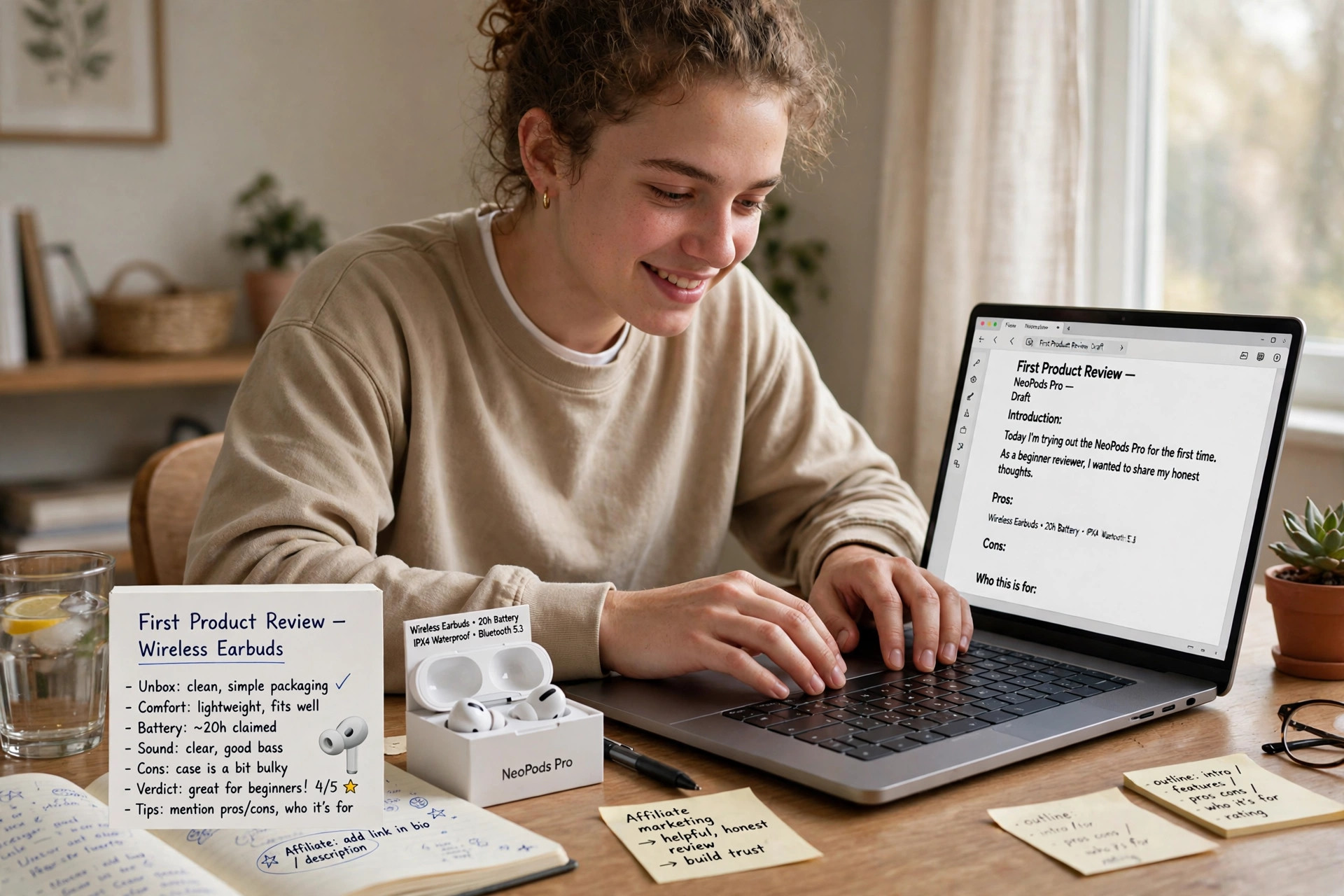
- A review: Share your honest thoughts about one product. What is good? What is not so good? Who should buy it?
- A tutorial: Show people how to do something, step by step. For example, “How to make coffee with this machine.”
- A comparison: Compare two products side by side, so readers can pick the right one for them.
Here are some simple rules for good content:
- Help first, sell second. Answer the reader’s question fully.
- Be honest. If a product has a weak point, say it. People trust honest reviews.
- Use simple words and short sentences, just like you talk.
- Add your affiliate link in a natural place, like at the end of your review or under your video.
Some beginners also use AI tools to plan their posts and write faster. If you are curious about that, you can see how it works in my Agentic Affiliate review.
Remember, you do not need perfect content. Your first post will not be your best post, and that is normal. Publish it, learn from it, and make the next one better.
Step 5: Share Your Links the Right Way
Your link is your money tool, so use it with care. Follow these three rules.
Rule 1: Always tell people your link is an affiliate link. This is called a disclosure. A short line is enough, like this: “This post has affiliate links. If you buy through my link, I may earn a small commission at no extra cost to you.” Being honest builds trust, and it is also the law in many countries. You can read the FTC’s simple Disclosures 101 guide to learn the rules.
Rule 2: Do not spam. Do not paste your link in random comments, groups, and forums where people did not ask for it. Spam makes people dislike your content, and many websites will ban your account.
Rule 3: Put links where they help. Add your link inside your review, your video description, your blog post, or your profile page — in places where people are already reading about that product. Some tools are built only for sharing affiliate links in a clean way. You can see one example in my 1Link System review.
If you run your own blog, Google also asks website owners to mark affiliate links for search engines with a special tag. You can read Google’s guide on qualifying outbound links when you are ready. For now, the honest text disclosure is the most important step.
Step 6: Track Your Clicks and Improve What Works
You cannot grow what you do not measure. Tracking means watching simple numbers.
Most affiliate programs show you a small dashboard. There, you can see:
- How many people clicked your link
- How many people bought something
- How much commission you earned
Check your numbers one time each week. Then ask simple questions. Which post got the most clicks? Make more content like that one. Which post got clicks but no sales? Maybe the product is too costly, or your review needs to be clearer.
Small improvements, week after week, are how beginners grow. You do not need to be perfect. You need to be steady.
Do not worry if your numbers are tiny at first. Every big affiliate marketer started with zero clicks. Your numbers will grow as your content grows. What matters most is that you keep learning from each post you publish.
Common Mistakes to Avoid
Please avoid these common beginner mistakes:
- Paying to join a program: Real affiliate programs are free to join. Any “program” that asks for a joining fee is a warning sign.
- Copying other people’s content: Copying can get your account banned, and Google does not rank copied text. Always write in your own words.
- Sharing links with no content: A link alone does not convince anyone. Helpful content first, link second.
- Promoting products you do not trust: If you send people to a bad product, they will not trust your next post.
- Giving up too early: Many beginners stop after two weeks. Commissions usually come after steady posting, not after one post.
- Expecting a fixed income: There is no salary in affiliate marketing. Your earnings depend on your traffic, your niche, and how much helpful content you publish.
Frequently Asked Questions
Can I really start affiliate marketing with no money at all?
Yes. Affiliate programs are free to join, and many platforms are free to use. Your real cost is your time and effort. You may choose to spend money later on tools or your own domain, but it is not needed at the start.
Do I need a website to start affiliate marketing?
No. You can start on YouTube, TikTok, Pinterest, Medium, or a free blog. Your own website can help you later, when you want more control and an email list, but it is not a must for day one.
How much money can I make with affiliate marketing?
There is no fixed answer, and nobody can promise you a number. Some people earn a little extra money each month. Other people build a bigger income over a long time. It depends on your niche, your traffic, and how steady you are with your content.
How long does it take to earn the first commission?
For many beginners, the first commission comes after a few weeks or a few months of steady posting. It is different for everyone. The people who keep posting helpful content every week usually get there faster than the people who post one time and stop.
Is affiliate marketing legal?
Yes. Affiliate marketing is a legal and very common way for companies to sell products. You only need to disclose your affiliate links and follow the rules of each program and platform you use.
What is the best free platform for a total beginner?
The best platform is the one you will use every week. If you like writing, pick a free blog or Medium. If you like talking and showing things, pick YouTube or TikTok. Start with one platform and learn it well.
Final Thoughts: Your Free 7-Day Action Plan
Affiliate marketing for free is real. You need no money to start. You need one niche, one free program, one free platform, and steady, helpful content.
Here is a simple 7-day plan to start this week:
- Day 1: Pick your niche. Write down 3 topics you know and like. Then choose 1.
- Day 2: Join 1 or 2 free affiliate programs in that niche. Save your affiliate links in a note.
- Day 3: Create your free account on one platform, like a free blog or a YouTube channel.
- Day 4: Plan your first 3 content ideas: one review, one tutorial, and one comparison.
- Day 5: Create and publish your first piece of content. Add your link and your disclosure line.
- Day 6: Share your content in one or two places where it truly helps people.
- Day 7: Check your first clicks, and plan the content for next week.
Start small. Stay honest. Keep posting. That is the whole secret, and it costs nothing to begin. I wish you a strong start, and I will keep sharing simple guides like this one here on my website.